Understanding Zero-Gravity Seating: Biomechanics, Benefits, and Design Principles
An editorial exploration of how weight distribution, posture, and support interact in zero-gravity-inspired chairs and loungers. We delve into biomechanics, design fundamentals, and practical guidance for evaluating ergonomic seating in homes, clinics, and workplaces.
What is zero-gravity seating?
Zero-gravity seating is a concept and design approach that aims to distribute the body's weight evenly, minimize axial compression on the spine, and promote a sense of weightlessness. Originating from aerospace and wellness narratives, it has evolved into a family of loungers, recliners, and adjustable chairs that emphasize posture-friendly positions, reduced pressure points, and adaptable support. While the term evokes space-age imagery, its practical essence rests on biomechanics: understanding how weight, gravity, and contact areas interact to shape comfort, circulation, and muscular relaxation.
In real-world terms, a zero-gravity-inspired chair positions the user in a reclined posture where the feet are elevated relative to the heart, often around a ~120–135 degree hip angle. This distribution aims to shift load away from the lumbar spine, reduce sacral pressure, and promote a more neutral spinal curvature. The result is a seating experience that can feel lighter, less tiring, and more supportive during activities ranging from reading and working to restorative rest.
This article expands on the core biomechanical principles, design strategies, and practical assessment methods to help readers select chairs and loungers that align with individual needs—whether you’re a student new to ergonomics, a designer exploring user-centered seating, or a clinician guiding patients toward better sitting postures.
Biomechanics of sitting in zero-gravity positions
The human spine, pelvis, and hips form a complex system that responds to contact pressure, joint angles, and muscle activity. In a zero-gravity-inspired configuration, weight redistribution aims to:
- Reduce axial load on the lumbar discs by supporting the pelvis and lower back in a gentle, neutral curve.
- Improve sacral-iliac alignment to minimize sacroiliac joint strain and promote stable pelvic control.
- Enhance venous return and peripheral circulation by elevating the legs and elevating the heart level consistently with the torso.
- Encourage balanced muscle activity, supporting posterior chain muscles (glutes, hamstrings, back extensor muscles) without overloading any single region.
Beyond mere position, the distribution of contact with the chair throughout the seat pan, backrest, headrest, and arm supports determines comfort longevity. An effective zero-gravity seating system reduces peak pressure points (notably at the sacrum, coccyx, and the heels) and spreads pressure across larger contact areas, such as the backrest, thigh supports, and lumbar region. This balanced support can translate into longer endurance for seated tasks and less fatigue after extended periods of sitting.
In practice, imagine three critical zones:
- The pelvic-hip junction, where the seat pan supports the low back and pelvis without forcing an anterior tilt.
- The thoracic-lumbar region, where the backrest fosters a natural spinal curve with scalable lumbar support.
- The lower limbs and feet, where elevation should feel natural and not cause strain in the calves or knees.
Key design principles behind zero-gravity seating
Designers translate biomechanics into tangible features. Here are the core design principles that underpin effective zero-gravity seating:
- Recline angles: Achieving a harmonious blend of head, thorax, and thigh angles that mimic a natural semi-reclined posture, often with adjustable ranges to accommodate different body types and tasks.
- Lumbar support: Customizable lumbar contouring to maintain the spine's gentle S-curve without creating localized pressure or rigidity. Support should be dynamic enough to adapt as users move.
- Weight distribution: Broad contact areas on the backrest and seat that share load across multiple tissues, minimizing high-pressure hotspots.
- Materials and foam zoning: Strategic layering and density variations to balance softness, support, and durability. Breathable covers and moisture-wicking fabrics enhance comfort during longer sessions.
- Adjustability: A spectrum of adjustable components—headrest, footrest, arm supports, and lumbar modules—empowers users to tailor the experience to their anatomy and activity.
- Stability and safety: Robust construction, stable feet or bases, and secure locking mechanisms to ensure confidence during posture changes or massage features.
A successful zero-gravity seating experience blends science and humanity: it respects the body's need for relief from sustained pressure while honoring the user's intention—whether it's a focused work session, a restorative nap, or a moment of mindfulness.
Practical guidance for assessing ergonomic seating at home or in a clinic
When evaluating chairs or loungers, consider both objective measures and subjective comfort cues. The following quick-check framework helps you identify seats that align with zero-gravity design principles:
- Posture cues: Check whether your pelvis sits level, your spine maintains a gentle curve, and your feet rest flat or slightly elevated without excessive knee flexion.
- Pressure distribution: Look for wide contact zones with a seat base and backrest that cradle the body rather than press into a few points.
- Adjustability: Test multiple configurations (head, foot, lumbar, and tilt) to see if you can reach a relaxed, fatigue-free state across different activities.
- Material resonance: Ensure the foam or alternative padding responds consistently to movement and remains supportive over time.
- Breathability: Favor fabrics and foams that manage moisture and heat, keeping you comfortable during longer sessions.
- Durability and stability: Confirm the chair remains steady as you shift positions and that the frame resists creaks or wobble.
For clinical or educational settings, pairing seated evaluations with simple posture checks (pelvic tilt, spinal alignment, and hip-knee-ankle angles) helps establish a baseline and track improvements after seating interventions.
Illustrative profiles: three individuals across time periods
Real-life perspectives illuminate timeless questions about comfort, posture, and design. Here are three profiles that connect different eras to the enduring pursuit of better seating.
1) Eudora, 1920s—A pioneer of practical ergonomics
In the jazz-age milieu, Eudora balanced form and function in improvised living rooms. She sought chairs that avoided numbness after long conversations and cross-legged sewing sessions. Her feedback championed a seat that supported the lower back without cramping the legs, with an emphasis on breathable fabrics and a forgiving cushion profile. Although she never spoke the modern language of “zero gravity,” Eudora’s intuition about posture and comfort foreshadowed today's ergonomic benchmarks, reminding designers that comfort thrives where body, space, and approachability converge.
2) Dr. Marcus Hale—A mid-century ergonomist
In the 1950s and 60s, Dr. Hale advanced the science of seating by mapping load distribution across seat interfaces and championing lumbar support as a clinical imperative. His work showed that chairs could modulate muscle activity and spinal alignment through mindful geometry, foam zoning, and adjustability. Hale’s legacy lives on in contemporary office chairs that allow precise lumbar control and seat depth adjustment, echoing the same goals he studied: reduce fatigue, protect the spine, and sustain focus.
3) Ayo Nakamura—A modern technologist and designer
Today, designers like Ayo Nakamura fuse material science with digital tooling to craft seats that respond to data. Nakamura’s work underscores the potential of adaptive foams, breathable fabrics, and modular components that can be tuned to individual preferences. Her explorations emphasize inclusive design—chairs that accommodate varied body types, postures, and activities—capturing the evolving language of ergonomic comfort in the 21st century.
A featured product that embodies zero-gravity design today
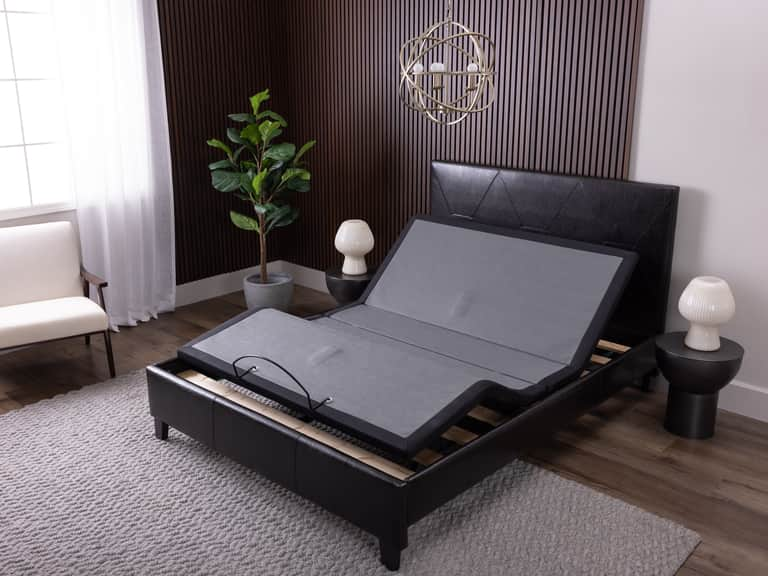
Among the contemporary solutions, one standout is the Leggett & Platt S-Cape HF 2.0 Adjustable Base. This base integrates WallHugger technology to keep your nightstand within reach as you incline, ensuring a smooth transition between rest and activity. It offers:
- Head and foot articulation for personalized comfort
- Dual massage with wave technology for targeted relief
- App and Bluetooth remote controls for intuitive use
- Under-bed lighting, USB ports, and adjustable legs for flexible setup
- Up to 850 lbs weight capacity for durability and safety
This product exemplifies a modern interpretation of zero-gravity seating: a data-informed blend of medicine-grade support, user-centric interfaces, and robust engineering. It demonstrates how adjustable bases can transform a standard bed into a personalized restorative sanctuary.
Images show the device in multiple configurations to illustrate the range of motion and usability.
Glossary of terms
- Axial load
- Load along the axis of the spine; zero-gravity seating aims to reduce peak axial loads on the lumbar region.
- Lumbar support
- Support that maintains the inward curve of the lower back, reducing fatigue and improving posture during seated tasks.
- Zero Gravity position
- A reclined posture that distributes weight more evenly and elevates the legs to promote circulation and spinal alignment.
- Sacral-iliac alignment
- Alignment of the sacrum and ilium bones to optimize pelvic stability and reduce pelvic tilt-related discomfort.
Further readings and non-commercial resources
A non-commercial stance helps readers explore credible sources, standards, and academic discussions around seating ergonomics. Look for textbooks on human factors, peer-reviewed ergonomics papers, and standards from recognized bodies that discuss posture, chair design, and seating comfort.
- Ergonomics in seating design: foundational texts and guidelines
- Biomechanics of sitting: spine, pelvis, and load distribution studies
- Standards for office chair design and occupational health guidelines
Closing thoughts: shaping the future of comfortable, evidence-based seating
Zero-gravity seating is more than a buzzword. It is a disciplined approach to understanding how humans interact with chairs, recliners, and bases in ways that protect the spine, support posture, and enhance well-being during countless daily activities. By appreciating biomechanics, embracing thoughtful design principles, and applying practical assessment methods, readers can select and even influence seating solutions that align with personal comfort and professional needs.